

Almost every client says some version of it before we start: "I'm not photogenic."
Sometimes it comes out as a joke. "Fair warning, I'm terrible in photos." Sometimes it's more serious, almost apologetic. "I just don't photograph well. Never have." Occasionally it comes as a preemptive defense, like they're trying to lower my expectations before I can be disappointed by them.
I've heard it so many times I've stopped being surprised by it.
What does surprise me is the gap between what people believe about themselves and what I actually see through the camera. That gap is where most of my best work lives.
What people usually mean when they say they're not photogenic
When someone tells me they're not photogenic, what they usually mean is one of a few things:
They have a memory of a photo they hated. A bad angle at a party, a passport photo taken under fluorescent light, a headshot from ten years ago that looked nothing like them. That image calcified into a belief.
Or they've been photographed by people who treated them like objects to arrange: move your chin, turn this way, smile more, not that much. The session became about managing instructions instead of being a person. Of course those photos didn't look like them. They weren't being themselves.

Or they simply don't know how to exist in front of a camera and no one has ever bothered to help them figure it out. So the camera has always felt like an examination they didn't study for.
None of that is a physical characteristic. None of it is permanent.
What I actually see as a portrait photographer
The first fifteen minutes of a session, I don't shoot. We talk.
I want to know what you do, what brought you here, what you're hoping to feel when you look at these photos. By the time I pick up the camera, I want you to have forgotten about it.
What I notice in those early minutes isn't how photogenic someone is. I'm watching how they move when they're comfortable. The way they tilt their head when they're saying something they care about. The specific quality of their laugh, whether it closes their eyes or opens them. These are the things that make a photograph feel like a person rather than a subject.
Every face has what I'd call a true angle: the perspective where something real comes through. For some people it's straight on. For others it's slightly turned. Finding it usually takes ten minutes. What's left of a session after that is just light and patience.
The women who tell me they're not photogenic almost always have what I look for most: specificity. An expression that belongs only to them. The performance is what I'm trying to get rid of, and they're usually already suspicious of performing. That's an advantage.
What a portrait session actually looks like
My sessions generally run three to four hours, including hair and makeup. The first hour rarely produces the best work. People need time to settle.
We start loose. Clothes you brought, hair and makeup done the morning of (I work with a team for that, if you need it), a space that doesn't feel clinical. I'll ask you to walk around, pick something up, look out the window. Nothing dramatic. Just movement that breaks the statue pose most people default to the second they think they're being photographed.
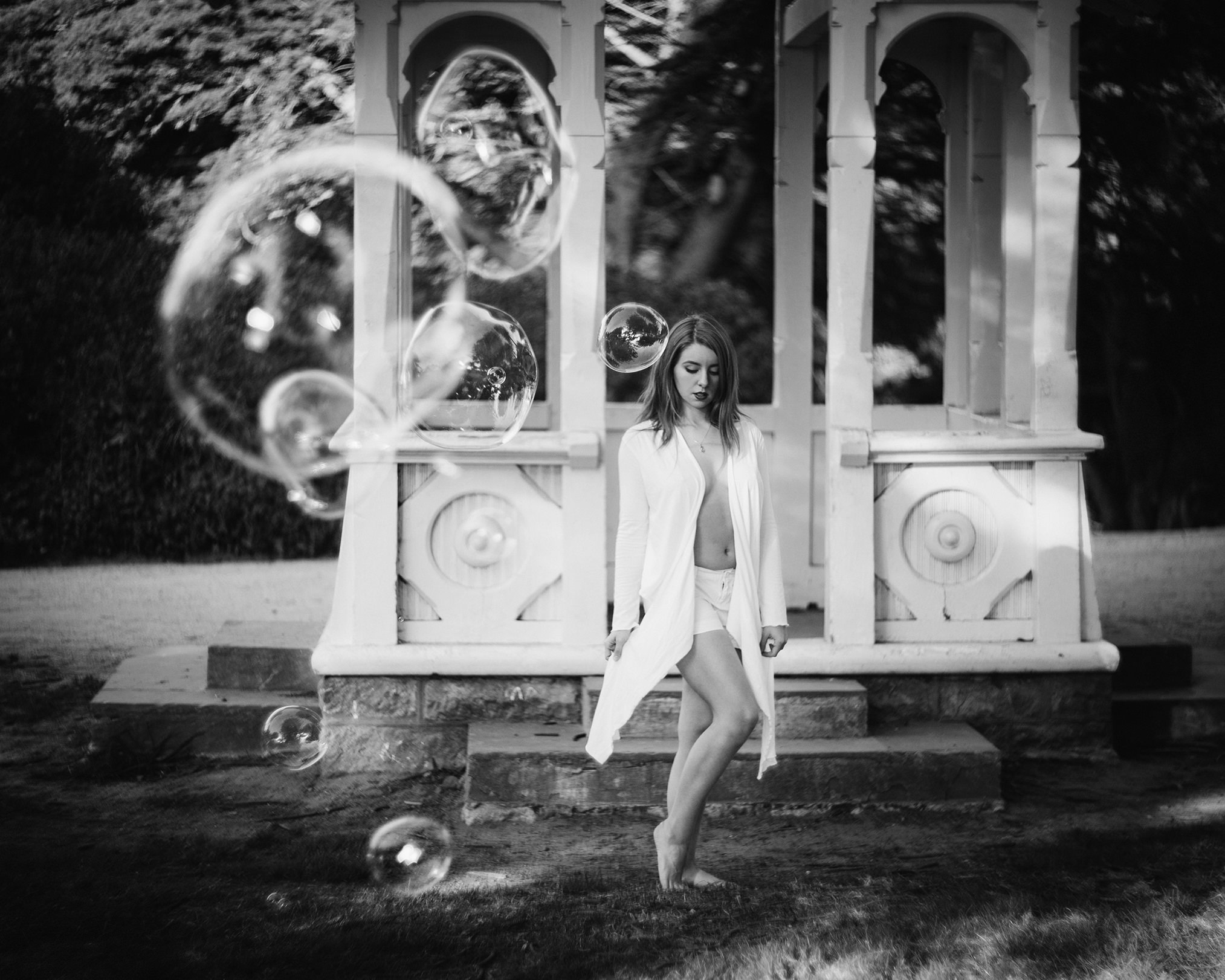
Around the forty-five minute mark, something usually shifts. The instructions start to feel less like instructions. You stop checking whether you're doing it right. I can see it happen in real time.
That's when I start getting the frames I came for.
By the end of a session, almost everyone says the same thing: "That was nothing like I expected." They say it with relief.
Why you may have hated past photos of yourself
If the only reference point you have for how you look in photos is a collection of bad ones, the photos are the problem.
Bad photography flattens people. Poor light turns texture into information overload. A wide lens distorts features at close range. A nervous subject plus an impatient photographer equals stiffness that reads as awkwardness in the final image.
None of those things have anything to do with how you actually look.
I've photographed women who walked in convinced they were unphotographable and walked out with images they've described as the first photos they've ever loved of themselves. What changed was the conditions under which they were photographed. That difference matters.
Who this kind of portrait session is for
This isn't the right kind of session for everyone. If you want fast and functional, in and out, standard background, done in thirty minutes, there are plenty of photographers who do that well.
What I do is for the person who wants something they can actually keep. A photograph that reflects who they are right now, in this chapter, with everything that comes with that. Not the obligatory headshot they'll replace in two years.
That requires a little time and a reasonable amount of trust. It doesn't require you to be photogenic.
It requires you to be present. Most people can do that once they stop trying to perform.
If you've been thinking about booking a portrait session and talking yourself out of it because you think you're not photogenic, I'd ask you to consider that the evidence you're using might not be reliable. You've been photographed badly. That's different.
If you're in Sacramento or anywhere in Northern California and want to talk about what a session would look like for you, get in touch.